Tata Ziptron EV Powertrain: India’s First Trusted EV System
Tata Ziptron didn’t chase EV hype, it built trust. Powering Nexon EV and beyond, it made electric cars reliable, safe, and practical for Indian families. | SpotGenie Gyaan | Top 12 engine

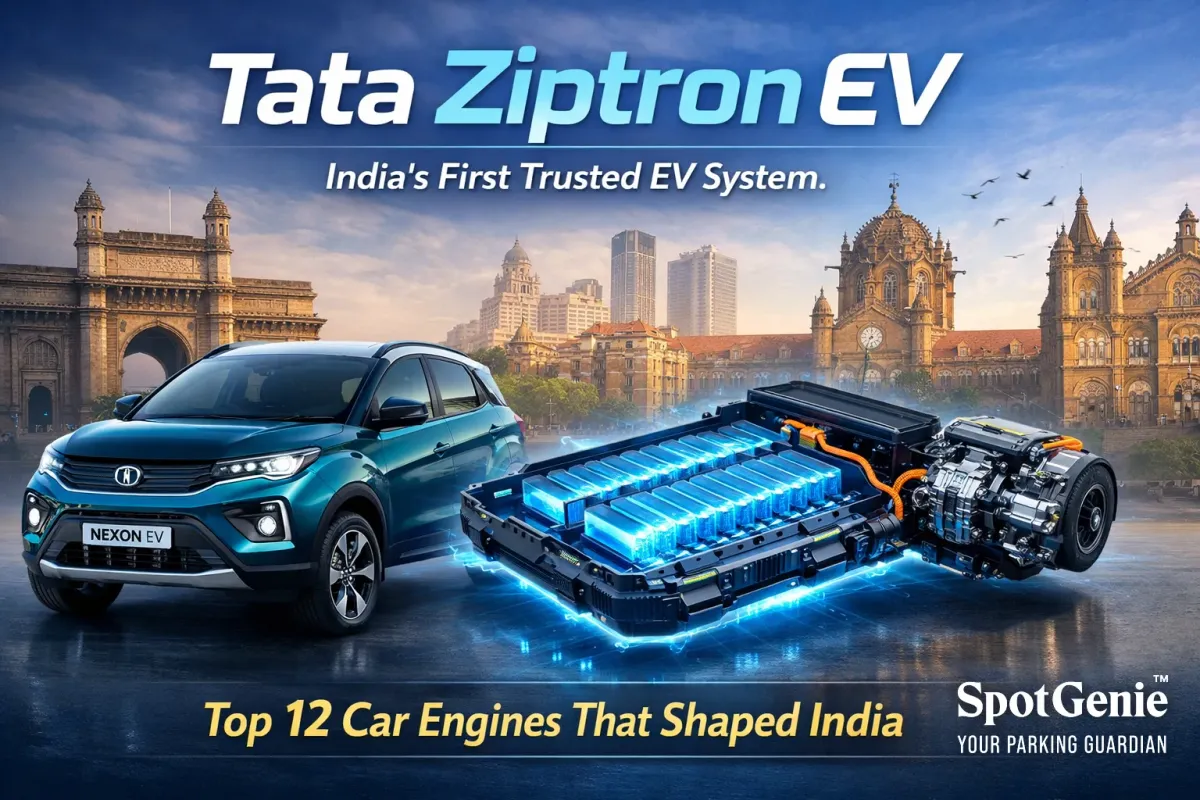
SpotGenie Gyaan: Tata Ziptron EV Powertrain, India’s First Trusted EV System
Before Ziptron, EVs in India were seen as:
- Experimental
- Fragile
- Urban-only toys
After Ziptron?
EVs became family cars.
The Tata Ziptron EV powertrain didn’t chase extreme range or flashy specs.
It focused on something far more important for India: trust.
What Is Tata Ziptron?
Ziptron is Tata Motors’ in-house EV powertrain ecosystem, covering:
- Battery pack
- Motor
- Power electronics
- Thermal management
- Safety architecture
It was designed specifically for Indian climate, roads, and usage patterns.
The Car That Changed Everything: Nexon EV
When the Tata Nexon EV launched in 2020, it became:
- India’s first mass-market EV
- The first EV bought as a primary family car
And Ziptron was the reason.
By 2025:
- Nexon EV became India’s best-selling electric car
- Thousands crossed 1–2 lakh km with minimal degradation
That’s when EV hesitation started disappearing.
Why Ziptron Was a Breakthrough for India
1. Reliability Over Range Anxiety
While rivals chased bigger numbers, Ziptron focused on:
- Consistent real-world range
- Stable performance in heat
- Predictable charging behaviour
This sparked the famous debate:
Reliability vs Range, and India chose reliability.
2. Built for Indian Conditions
Ziptron systems were engineered to handle:
- 45°C summers
- Monsoon flooding
- Rough urban roads
- Voltage fluctuations
Battery packs were:
- IP67-rated
- Liquid-cooled
- Reinforced for safety
3. Safety First EV Architecture
Tata integrated Ziptron into:
- 5-star rated platforms (Global/Bharat NCAP)
- Multi-layer battery protection
- Real-time thermal monitoring
This made Tata EVs feel as safe as ICE cars, a massive mental shift.
Ziptron Technical Snapshot (Simplified)
- Motor type: Permanent Magnet Synchronous Motor
- Battery chemistry: Lithium-ion
- Cooling: Liquid-cooled battery & motor
- Regenerative braking: Multi-level
- Architecture: Integrated with ICE-derived safety platforms
- Focus: Stability, longevity, safety
No extreme specs, just usable EV engineering.
Beyond Nexon: Ziptron’s Expanding Footprint
Ziptron now underpins:
- Tata Nexon EV
- Tata Tigor EV
- Tata Punch EV (Ziptron-derived architecture)
Each model reinforced one idea:
EVs can be boringly reliable, and that’s a compliment.
Ownership Experience: Where Ziptron Won Hearts
Owners consistently praised:
- Low maintenance costs
- Stable battery health
- Predictable service experience
Tata’s expanding EV service network further strengthened confidence.
Challenges & Honest Perspective
SpotGenie keeps it real.
Ziptron criticism includes:
- Range not class-leading
- Conservative tuning
- Not performance-focused
But Tata never promised thrills.
Ziptron’s promise was simple:
“Your EV will just work.”
And it delivered.
SpotGenie: Trust Is the Real EV Breakthrough
Just like SpotGenie’s QR-based alert system builds instant trust and safety awareness on Indian roads, Ziptron built confidence in electric mobility.
Not with marketing hype —
but with consistency.
The Legacy of Ziptron
The Tata Ziptron powertrain will be remembered as:
- India’s first trusted EV system
- The reason families accepted EVs
- The foundation of India’s EV adoption curve
Before fast charging networks…
Before long-range wars…
Ziptron came first.
Follow us on:
🅾 Instagram |
ⓕ Facebook |
𝕏 X |
▶️ YouTube |
🟢 WhatsApp