🛵 SpotGenie Gyaan: Bajaj Chetak, The Scooter That Became an Emotion
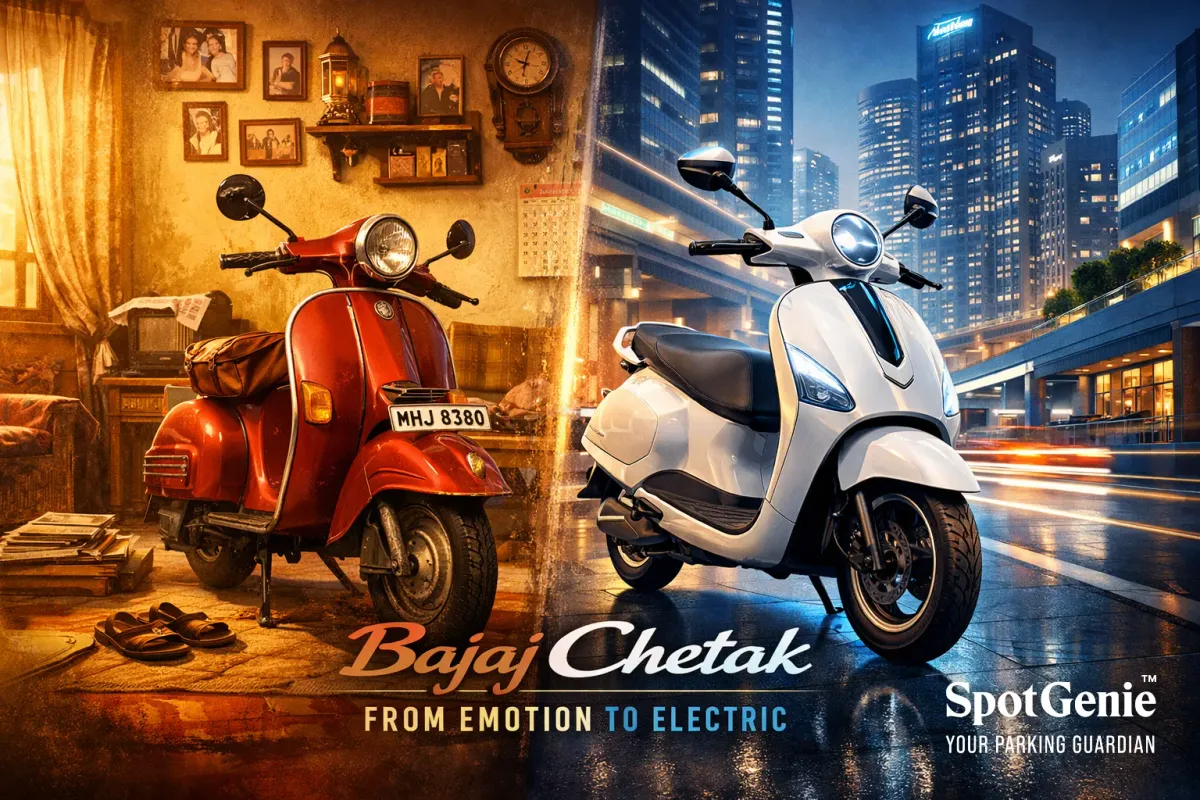
Launched in 1972, Bajaj Chetak wasn’t just a scooter—it was a family member. Its 2020 electric return blends deep nostalgia with modern EV tech, proving some icons never fade.

🇮🇳 Before Chetak: Mobility Was a Luxury
In the early 1970s, owning a two-wheeler in India meant:
- Years on a waiting list
- Government allotments
- Limited choices
Personal mobility was aspiration, not convenience.
Then came a scooter that would quietly enter millions of homes.
1972 original | 2020 electric comeback | Where nostalgia met the future
🕰️ 1972: When Bajaj Chetak Entered Indian Households
Launched in 1972, the Bajaj Chetak quickly became:
- The family’s first vehicle
- A symbol of stability
- A marker of middle-class progress
It wasn’t flashy.
It wasn’t fast.
It was reliable, simple, and dignified.
For decades, “Chetak” was synonymous with “scooter.”
🧠 Why Chetak Became an Emotion (Not Just a Product)
Chetak was part of life:
- Fathers rode it to office
- Mothers learned balance on it
- Children sat sideways in front
- Groceries, gas cylinders, school bags, all carried silently
The scooter aged with the family.
That emotional imprint is rare, and impossible to manufacture today.
⚙️ The ICE Chetak: Built to Last
What Defined the Original Chetak
- Metal body construction
- Simple two-stroke, later four-stroke engines
- Minimal electronics
- Repairable anywhere
Chetaks were known to run 20–30 years with basic maintenance.
It wasn’t uncommon to hear:
“This scooter will outlive us.”
📉 The Fall: When Time Caught Up
By the early 2000s:
- Gearless scooters took over
- Emission norms tightened
- Design expectations changed
In 2005, Bajaj stopped ICE scooter production.
For many Indians, it felt like the end of an era.
But the story wasn’t over.
⚡ 2020: The Electric Resurrection of Chetak
In January 2020, Bajaj brought back the Chetak, as an electric scooter.
This wasn’t accidental branding.
It was deliberate legacy revival.
Why Bajaj Chose Chetak for EV
- Massive recall value
- Trust across generations
- Emotional credibility in a tech-driven EV market
The name carried assurance, not hype.
🔋 Chetak EV: Nostalgia Wrapped in Modern Tech
Core Highlights (Chetak EV)
- Premium metal body (rare in EVs)
- Smooth, silent electric motor
- Urban-focused range
- Connected features in newer variants
- Clean, retro-modern design
Unlike flashy EV launches, Chetak EV felt mature.
It wasn’t screaming the future.
It was arriving calmly.
📊 Market Position & Impact
-
Among India’s top premium electric scooters
-
Strong presence in urban metros
-
Appeals to both:
- Older buyers (nostalgia)
- Younger buyers (design + brand trust)
Chetak EV proved that heritage brands can survive electrification.
🔄 ICE vs EV: Same Soul, Different Power
| Aspect | ICE Chetak | Chetak EV |
|---|---|---|
| Era | 1972–2005 | 2020–present |
| Identity | Family workhorse | Urban premium EV |
| Build | Metal, rugged | Metal, refined |
| Emotion | Nostalgia | Legacy reborn |
The engine changed.
The emotion didn’t.
📚 Other SpotGenie Gyaan
Yamaha FZ - India’s First Streetfighter Craze
Suzuki Access 125, The 125cc Scooter That Redefined Comfort
Honda Activa, India’s Scooter Revolution
TVS Apache, Racing DNA That Redefined Performance Bikes in India
Hero Honda CBZ (1999), India’s First Youth Performance Bike
Bajaj Pulsar 150/180/220, India’s Mass-Market Sport Bike Icon
Royal Enfield Bullet 350: World’s Longest Running Motorcycle
Yamaha RX100, The Legend Returns
Hero Splendor: India’s All-Time Best-Selling Bike
India’s Most Iconic Bikes: SpotGenie Gyaan Series Kickoff (2025)
New Tata Sierra Returns Nov 25, 2025
Tata Sierra Bookings Response: A Thunderous Comeback
Follow us on:
🅾 Instagram |
ⓕ Facebook |
𝕏 X |
▶️ YouTube |
🟢 WhatsApp