🏍️ SpotGenie Gyaan: Yamaha FZ - India’s First Streetfighter Craze
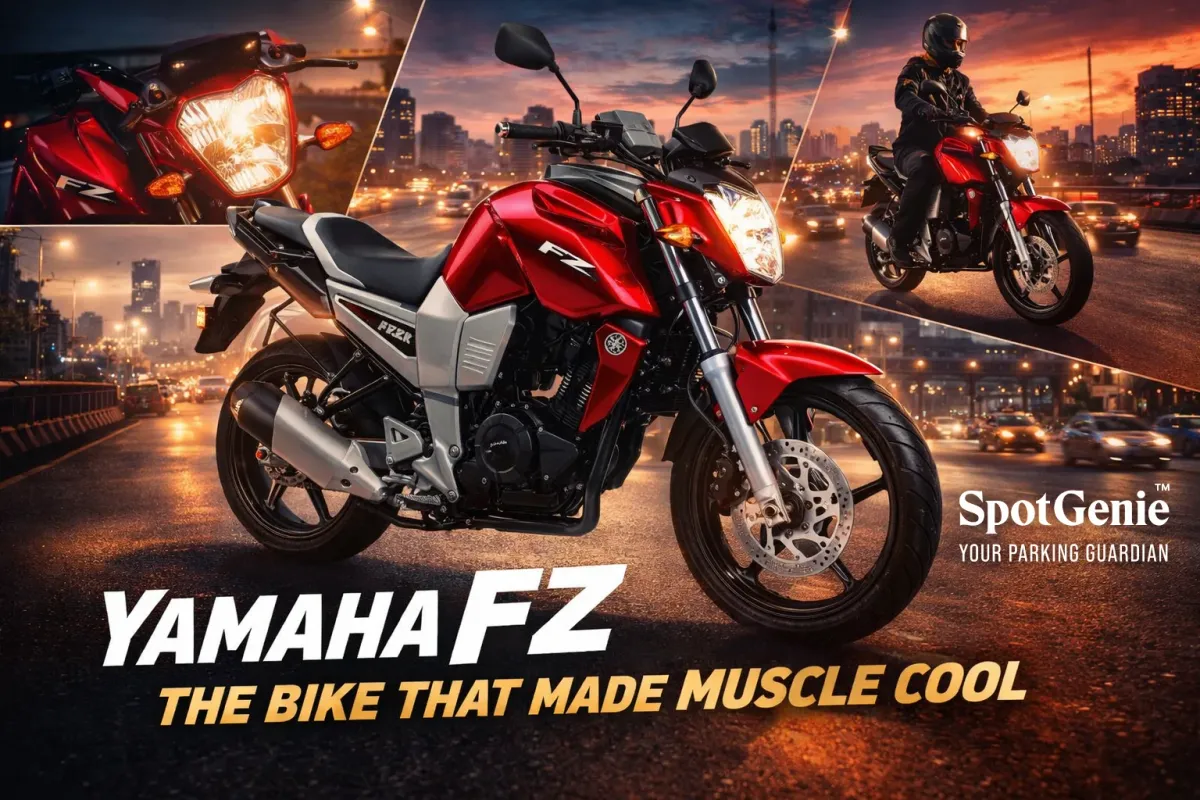
When Yamaha launched the FZ in 2008, it didn’t chase mileage or decals, it introduced muscle. Fat tyres, tank-heavy stance, and streetfighter attitude changed how Indians viewed 150cc bikes forever.

🇮🇳 India Before the FZ: Slim, Sharp, Sensible
Before 2008, India’s 150cc segment followed a predictable formula:
- Slim bodies
- Pointy fairings
- Racing-inspired graphics
Performance bikes looked fast, but rarely looked muscular .
Then Yamaha did something radical.
It launched a naked, streetfighter-inspired motorcycle that prioritised:
- Visual mass
- Road presence
- Rider posture
The result? Yamaha FZ .
Launched in 2008 | Muscle styling that rewrote the 150cc rulebook | FZ DNA alive in 2025
🔥 2008: The Birth of India’s Streetfighter Era
The Yamaha FZ debuted in India in 2008 as part of Yamaha’s global FZ lineup.
What made it revolutionary wasn’t just the engine, it was the attitude .
What Shocked the Market
- Massive fuel tank design (by Indian standards)
- Wide 140-section rear tyre (unheard of in 150cc then)
- Upright, commanding riding position
- Minimal graphics, maximum muscle
The FZ didn’t scream speed.
It looked powerful even when parked .
That changed Indian bike design forever.
⚙️ Engineering That Matched the Muscle
While styling grabbed headlines, Yamaha ensured the mechanics backed it up.
Core Technical Highlights (2008 FZ)
- 153cc, air-cooled engine
- Smooth power delivery, strong low-end torque
- Excellent chassis balance
- Best-in-class refinement at the time
This made the FZ:
- Easy to ride daily
- Comfortable for long commutes
- Fun without being intimidating
It wasn’t a racer.
It was a street boss .
👥 Who Bought the FZ, and Why
The FZ redefined buyer psychology.
It attracted:
- College students upgrading from commuters
- Young professionals wanting road presence
- Riders bored of “sticker-sporty” designs
For many, the FZ was:
“The first bike that made me feel big on the road.”
That emotional shift is why it became iconic.
📊 Impact on the Indian Motorcycle Industry
After the FZ, everything changed.
What the FZ Triggered
- Rise of naked / streetfighter bikes
- Wider tyres became aspirational
- Focus on design identity , not just mileage
- Competitors rushed muscular models
Without the FZ:
- Pulsar wouldn’t evolve the way it did
- Street-naked bikes wouldn’t dominate today
The FZ didn’t just sell units.
It reset expectations .
🔄 Evolution of the FZ DNA (2008 → 2025)
Yamaha didn’t abandon the FZ idea. It refined it.
Key Phases
- FZ-S with improved styling & refinement
- Fuel injection era
- BS-VI compliant engines
- LED lighting, digital consoles
- Connected features in recent years
Even in 2025 , Yamaha’s FZ lineup continues to emphasise:
- Muscular proportions
- Comfort-oriented ergonomics
- Smooth, refined engines
The DNA remains unmistakable .
🧠 Why the FZ Still Matters in 2025
In today’s world of ADV bikes and hyper-spec sheets, the FZ’s legacy stands tall.
Because it proved:
- Design can sell
- Presence matters as much as performance
- Indian riders want personality
Modern bikes may have more tech, but they all owe something to the original FZ formula .
📚 Other SpotGenie Gyaan
Suzuki Access 125, The 125cc Scooter That Redefined Comfort
Honda Activa, India’s Scooter Revolution
TVS Apache, Racing DNA That Redefined Performance Bikes in India
Hero Honda CBZ (1999), India’s First Youth Performance Bike
Bajaj Pulsar 150/180/220, India’s Mass-Market Sport Bike Icon
Royal Enfield Bullet 350: World’s Longest Running Motorcycle
Yamaha RX100, The Legend Returns
Hero Splendor: India’s All-Time Best-Selling Bike
India’s Most Iconic Bikes: SpotGenie Gyaan Series Kickoff (2025)
New Tata Sierra Returns Nov 25, 2025
Tata Sierra Bookings Response: A Thunderous Comeback
Follow us on:
🅾 Instagram |
ⓕ Facebook |
𝕏 X |
▶️ YouTube |
🟢 WhatsApp